
Millwork vs. Casework vs. Cabinetry
The short version: millwork is custom, mill-made architectural woodwork (paneling, trim, moldings, made-to-measure cabinetry). Casework is modular, box-shaped construction — cabinets, shelving, storage — usually in standard sizes. Cabinetry is the overlap: custom-built cabinetry is millwork; stock and semi-custom cabinetry is casework. Knowing which you're buying is the difference between a precise budget and a surprise.
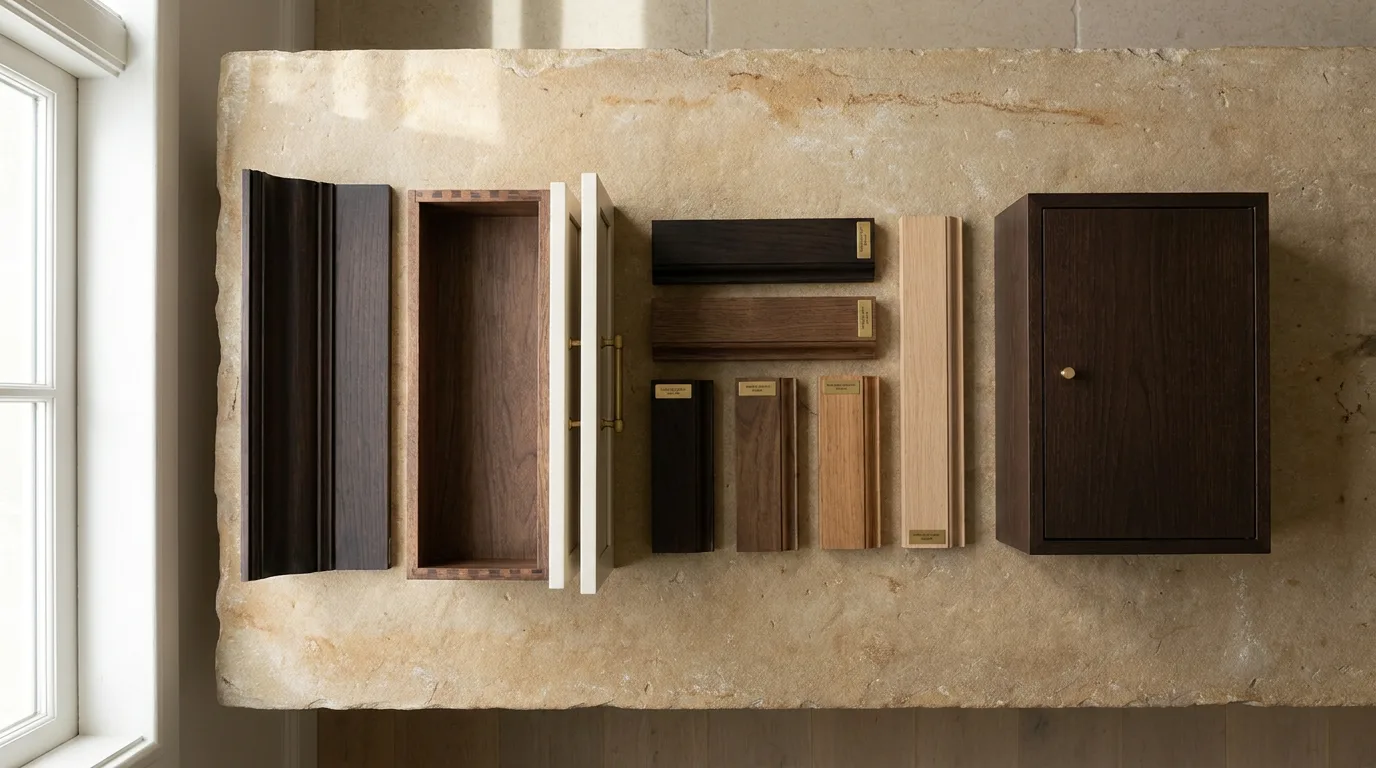
What is millwork?
Millwork is any woodwork produced in a mill and tailored for a specific space — doors, wall paneling, moldings, trim, stair parts, and custom cabinetry. It's defined by customization: dimensions, profiles, species, and details are built to spec rather than pulled from a catalog. Millwork is what gives a room its architectural character, and it typically uses higher-grade hardwoods and veneers.
What is casework?
Casework is modular, box-shaped carpentry — cabinets, storage units, bookshelves, and similar pieces built as standardized "cases." It prioritizes efficiency and repeatability: standard sizes and finishes that are quicker to produce and install, often in plywood or MDF. Think of a run of identical base cabinets, or the casework that lines a lab, office, or back-of-house.
Where cabinetry fits
Cabinetry is the one place the two categories meet. The rule is simple:
- Custom-built cabinetry = millwork. Made to measure for your space, in your materials.
- Stock or semi-custom cabinetry = casework. Assembled from standard modular boxes.
So "are cabinets millwork or casework?" depends entirely on how they're made.
Side by side
| Millwork | Casework | |
|---|---|---|
| Build | Custom, built to spec | Modular, standardized boxes |
| Materials | Hardwoods, premium veneers | Often plywood / MDF |
| Cost | Higher | More budget-friendly |
| Timeline | Longer (made to order) | Faster (factory-produced) |
| Best for | Architectural character, exact fit | Repeatable storage, standard sizes |
Distinctions consistent with industry references including NY Loft and Accuride.
If a piece is built to your exact space in your chosen materials, it's millwork. If it's a standardized box you could order in set sizes, it's casework. Custom cabinetry is millwork; stock cabinetry is casework.
Why the difference matters to your budget
The label changes the math. Casework is faster and cheaper because it's standardized — ideal where standard sizes work and the look is utilitarian. Millwork costs more and takes longer because every piece is made for one space — and it's the only way to get a true fit against pre-war walls, a specific wood, or a detail that defines the design. The mistake is paying millwork prices for what could be casework, or expecting casework speed from true custom work. A good shop will tell you which your project actually needs.
Not sure which your project needs?
Tell us about the space and we'll be straight with you about where custom millwork earns its cost — and where it doesn't.
Talk to the shop →Frequently asked questions
What is the difference between millwork and casework?
Millwork is custom, mill-made architectural woodwork (paneling, trim, custom cabinetry). Casework is modular box-construction (cabinets, shelving) usually in standard sizes. Millwork is custom; casework is modular.
Is cabinetry millwork or casework?
Both, depending on the build. Custom, made-to-measure cabinetry is millwork. Stock and semi-custom cabinetry is casework.
Which is more expensive?
Millwork — it's custom and uses higher-grade materials, so it costs more and takes longer. Casework is cheaper and faster.